Credits:
Unity programming by Nick Collins
Design, animation and graphics by Adinda van ’t Klooster
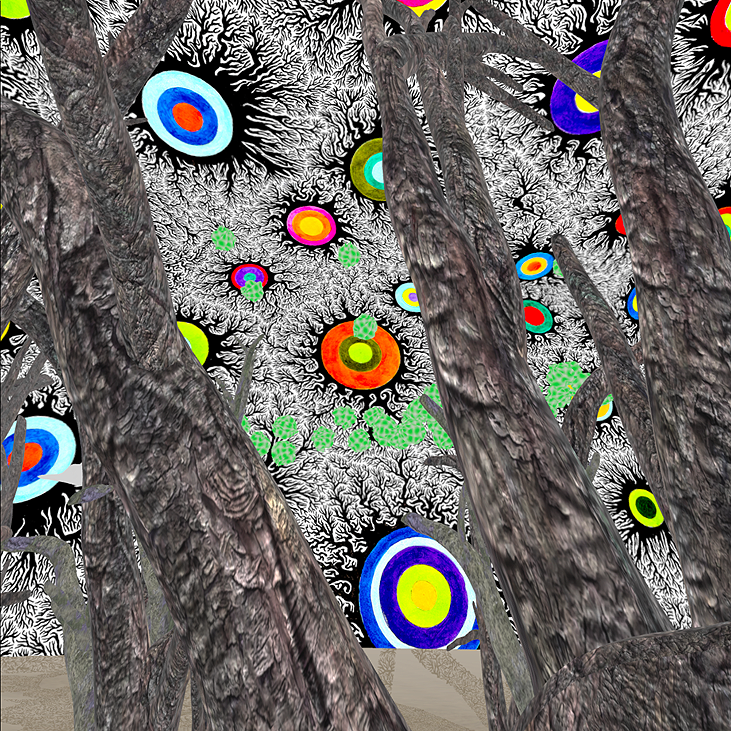
The VRoar VR art game allows the user to see their vocal expression directly affect the graphics in a surreal landscape. By experimenting with their voice and making unusual vocal utterances, the user moves textured blobs around in a desert landscape. Trees are created by moving through a desert landscape. All the elements in a scene pulse and distort through expressive voice control. Surreal clouds distort and dance based on the sounds you make. The exact mapping between sound features and graphics is changed upon a button press. The underlying software listens to low and mid-level sound features and the games engine is used to drive the live animated graphics. Analogue ink drawings provide immersive backdrops to the scene. The aim is simply to explore and wander, to be playful and to listen, express and observe.
VRoar facilitates testing theories combining knowledge from the areas of video gaming, vocal improvisation and audiovisual aesthetics, and contributes to the development of novel interfaces for musical and audiovisual expression.
VRoar for the Quest 3 or 2, can be downloaded for free from the Meta store here.
Credits:
Unity programming by Nick Collins
Design, animation and graphics by Adinda van ’t Klooster